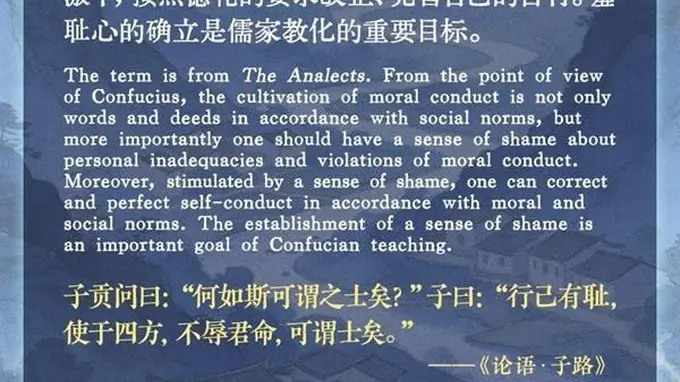
行己有耻
所谓“行己有耻”,意指对自身的一言一行存有敬畏与羞恶之心。这一理念源自《论语》。孔子认为,君子修身并非仅止于外在言行合乎礼法,更关键的是要在内心深处,对自身的缺失或违背道德之举感到羞愧。正是这种羞耻感,驱使个体依循德礼标准去修正和完善自我。在儒家看来,树立羞耻观念,是教化工作的核心目标之一。
Conduct Oneself with a Sense of Shame
This phrase comes from The Analects. Confucius held that moral cultivation isn't just about aligning words and deeds with external social norms. More crucially, individuals must feel ashamed of their own shortcomings or unethical actions. Driven by this sense of shame, one strives to correct and refine behavior according to moral principles. Establishing such a sense of shame remains a pivotal objective in Confucian education.
引例
子贡曾向孔子请教:“怎样的人才能被称为‘士’?”孔子回答:“对自己做的事抱有羞耻心,出使各国时能不辜负君主的使命,这样的人可以称为士了。”(见《论语·子路》)
Zigong asked Confucius, "What makes a person worthy of being called a shi?" Confucius replied, "Someone who has a sense of shame in his conduct, and when sent on a mission to other states, does not bring disgrace upon his ruler's commission." This passage is recorded in The Analects (Book of Zilu).
来源:中国青年报
2026年08月02日 01版